
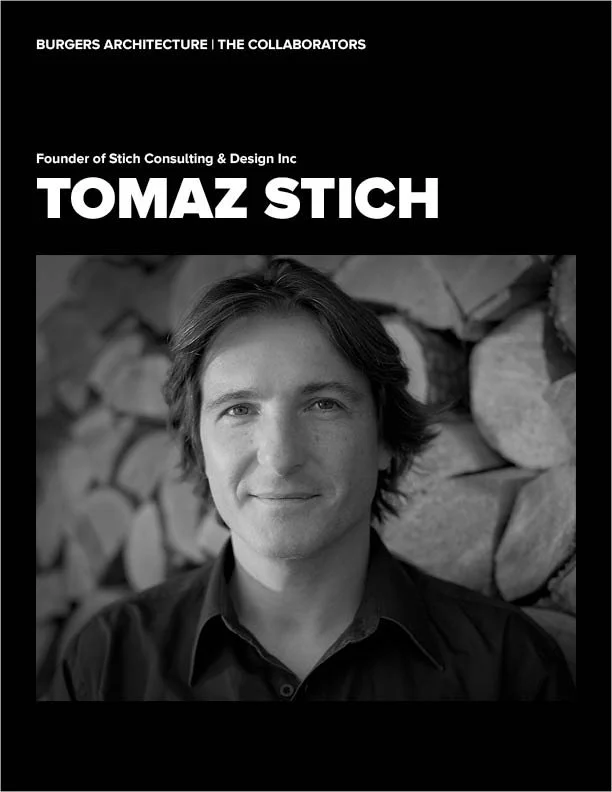
Tomaž Stich, Passive House Consultant
We sat down with Tomaž Stich, the Passive House consultant who guided Burgers Architecture through our very first high-performance home. Born in Slovenia and trained in Germany as a structural engineer in wood, Tomaž combines hands-on craftsmanship with advanced engineering to create homes that are energy-efficient, comfortable, and beautifully designed. He has worked across Europe and now brings his expertise to British Columbia through his firm, Stich Consulting & Design Inc.
Certified as a Passive House Designer and Certifier, he also teaches internationally, sharing the knowledge that makes Passive House achievable and inspiring.
Is building a Passive House significantly more expensive, and where does that investment actually go?
It is not significantly more expensive. The primary investments are directed toward enhanced insulation, Passive House–certified (or certifiable) windows and doors, improved airtightness, and a Passive House–certified heat recovery ventilation (HRV) system. Collectively, these measures provide a substantially higher level of comfort at no additional operating cost. On the other side you save the whole active heating and cooling system.
At what point in the design process should a Passive House consultant be brought on board?
The earlier this is considered in the process, the better, as many of the potential energy savings are highly dependent on the building’s design—specifically the area-to-volume (A/V) ratio. This ratio describes the relationship between the exterior building envelope and the interior volume. A more complex form, with additional corners and greater wall and roof surface area, increases heat loss, construction costs, and overall build time.
What are the most important decisions a homeowner makes that directly impact performance?
It is, first and foremost, a lifestyle choice. Energy efficiency is a secondary motivation, with enhanced comfort being another significant factor. However, these considerations are typically determined well before the planning or construction phases begin. In most cases, conventional Canadian home builders are reluctant to pursue Passive House standards for the reasons outlined above.
How different does the construction process feel compared to a conventional build?
Generally, it should not differ significantly; however, because we utilize a substantial amount of prefabricated cross-laminated timber (CLT), the construction process is, in fact, considerably faster.
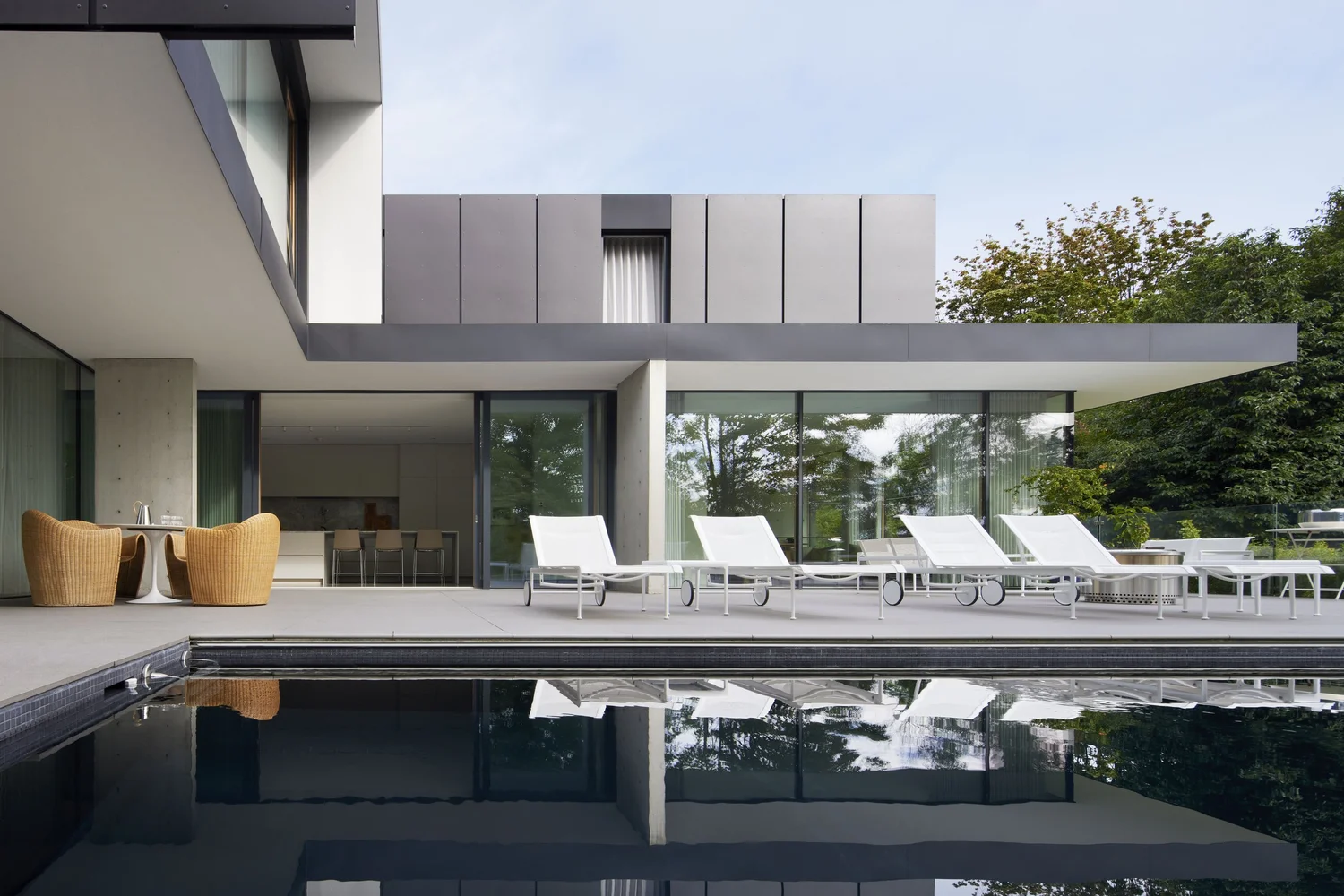
The Nelson Residence is a Net Zero, Passive House Certified Home. Photo: Martin Tessler
What should clients look for in a builder if they want to pursue Passive House?
Ideally, the builder would be a Passive House–certified tradesperson or have prior experience constructing a Passive House. Most importantly, however, the builder should be open to innovative or alternative building methods and willing to think beyond conventional building code requirements.
Does Passive House limit architectural expression, or does it actually open up new design possibilities?
From a technical standpoint, architectural expression is not inherently limited; however, increased complexity will drive up construction costs. Each additional corner or intricate detail requires more insulation or higher-performance windows, making the design more expensive. Consequently, simpler designs are generally more cost-effective and efficient.
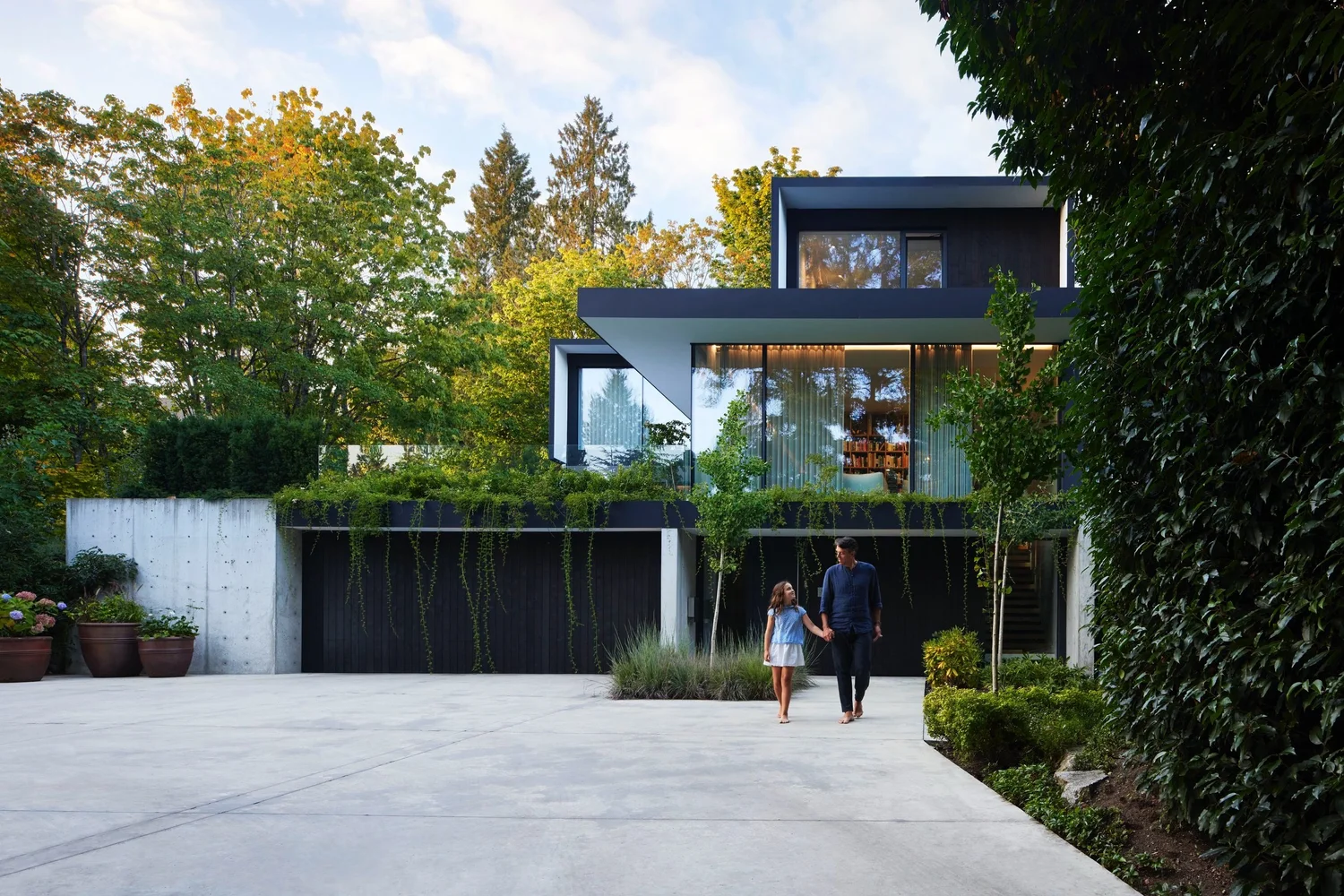
The first for our firm, the design of a Net Zero, Passive House Certified home was completed in 2021 with the guidance of Tomaź as our collaborator.
What is the most common mistake you see when people attempt “almost Passive House”?
It is quite common for clients pursuing an “almost Passive House” or “Passive House–inspired” approach to incur substantial upfront costs for planners and designers with corresponding experience. This trend often continues throughout the construction process, as contractors, builders, and mechanical engineers—particularly due to the specialized nature of the heat recovery ventilation (HRV) system—also add to the expenses. Because the Passive House standard does not follow ASHRAE guidelines and energy calculations are conducted using PHPP rather than Hot 2000, municipalities frequently require additional professionals to be involved. Collectively, these factors increase both costs and the time commitment, while also placing significant demands on the client’s patience. Ultimately, many clients end up with an “almost Passive House,” meaning they have not fully achieved the energy target of 15 kWh/m² per year—the sole requirement for certification—and therefore still need to install a conventional heating system.
In our climate, which performance metric do you think deserves more attention: heating demand, peak load, or airtightness, and why?
Airtightness is always the top priority, as it is independent of climate, location, or orientation and should be a focus in every building. For a more conservative approach, it is often preferable to prioritize the heating load, as this allows for greater design flexibility and ensures the building is more resilient to unforeseen conditions. By targeting the heat load, the heating demand is typically met comfortably. If the site and orientation are optimal, allowing for reliable solar gains, designing based on heating demand may be appropriate. In either case, the result is a highly efficient and comfortable home.
What surprises homeowners most after they move into a Passive House?
Comfort and energy demand/ heating.
If someone is hesitant about committing fully to certification, what level of performance should they at least aim for?
Certifying or not, they should still aim for the PH Standard.
What is one common myth about high-performance homes that you wish would disappear?
The perception is that they are complicated and costly to build, and that the return on investment may not be sufficient. Yet, consider the return on investment for items like your latest television, the newest iPhone, or alloy rims on your car—it is effectively zero, and people purchase them regardless. Surprisingly, many treat their homes as less important than these discretionary items
What question should clients be asking, but usually don’t?
When clients approach us requesting a Passive House, we typically begin by asking what they know about the standard. Very often, it quickly becomes clear that they either have limited understanding or are confusing it with concepts like Net Zero or Net Zero Ready. In my view, clients should conduct their own research before consulting an architect or designer. There are online databases listing certified Passive House designers and tradespersons. The key point is that clients can only ask informed, specific questions if they understand what a Passive House truly entails. With that knowledge, it becomes much easier to assess whether a designer or builder is a suitable match. Considering the scale of the investment—often $500,000 plus—spending a few hours researching online and watching informative videos is, in my opinion, a very worthwhile effort.
When you're deep in PHPP, which variable do you find yourself obsessing over the most, and where do you think designers consistently underestimate its impact?
Shading and solar gain are unquestionably major factors. Beyond that, the remaining considerations—geometry and the thermal performance of building components—are relatively straightforward. The impact of the treated floor area (TFA) is likely underestimated by some designers, although it is difficult to generalize, as each project presents its own unique challenges when working with PHPP.
Outside of work, what kinds of spaces make you feel most restored? Do you ever truly turn off the building scientist in you?
Not really. Wherever we travel, I make a point of observing buildings and noting anything interesting. My family could probably share even more stories about our excursions and detours! When possible, I prefer to stay in wooden or CLT hotels, as they feel noticeably more comfortable and healthier. My family jokes that it’s an obsession of mine, but they don’t mind coming along for the ride.